All the recipes

No. 26IndianChickenCurry

Ultimate Chicken Vindaloo

The vindaloo that makes people stop mid-bite.

John Drummond

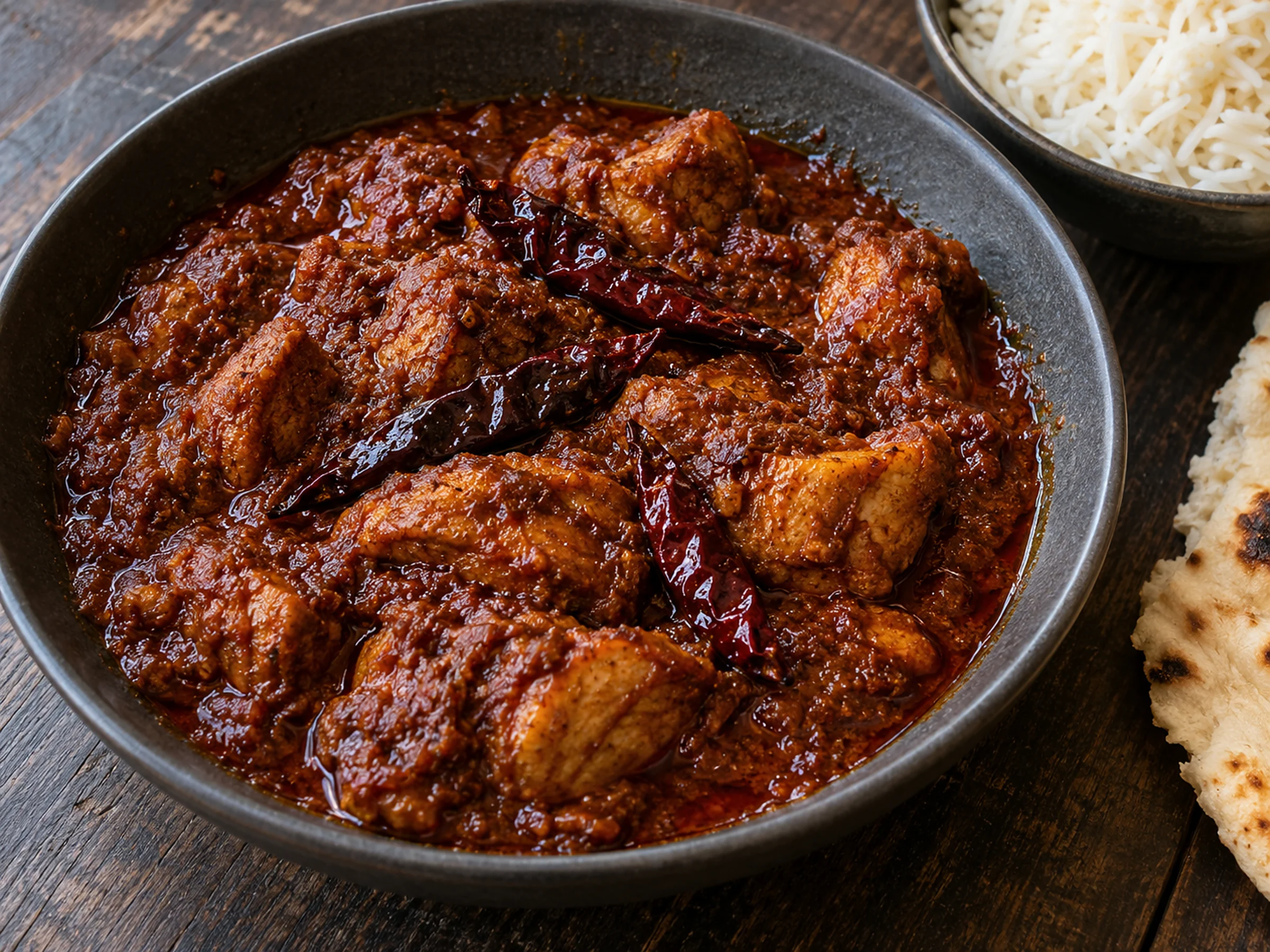
A dark bowl of chicken thigh pieces in a thick, glossy, dark red vindaloo sauce with three dried red chillies on top, rice and naan beside it
Prep40min
Cook1hr 30min
All up

2hr 10min+ 1–2 hours

Serves4
LevelHard

Mise en place

What you need

Tick each one off as it goes in.

Chicken and marinade

Freshly roasted vindaloo spice blend

The signature sauce

Makes 4 serves

Deeply layered. Rich, glossy sauce. Assertive chilli. A controlled vinegar edge. This moves away from a strictly traditional Goan vindaloo towards a restaurant-quality, deeply layered chicken vindaloo, borrowing from both traditional Goan spice pastes and the richer, more intense Indian restaurant style. The goal isn’t just heat. It’s that moment when you taste the sauce and think, holy shit, that’s good.

This is Version 1.1, and it is a proposed signature recipe, not a kitchen-tested one yet. Treat it as the first serious version to refine. Version 1.0 was reviewed before it went up, and the changes are in the method: the browned onions are blended and fried again, the stock is halved, and there is more vinegar, more garlic and salt in the sauce. Serves 4–6.

Six things it is after. Deep savoury richness: properly browned onions, chicken thigh fat and roasted spices. Layered chilli flavour: Kashmiri chilli for colour and complexity, plus hotter chilli for a satisfying kick. A warm spice backbone: cumin, coriander, cinnamon, cloves, black pepper and a little fennel. Assertive garlic: absolutely essential for vindaloo. Controlled acidity: the vinegar should cut through richness, never dominate. And a luxurious sauce: thick, smooth, glossy and deeply flavoured rather than thin and watery.

Heat: the Kashmiri chilli powder stays the same at every level. It provides the deep red colour and characteristic chilli flavour, not just heat. The hot chilli powder is the dial — 1 tsp is medium-hot, still bold and spicy but approachable; 1½ tsp is hot, proper vindaloo heat without overwhelming the spices; 2 tsp is serious heat. Hot chilli powder varies considerably in strength, so adjust after tasting.

Three details to insist on. Use thigh, not breast: its extra fat and connective tissue make the chicken more forgiving and build richness. Make it the day before: cool promptly, refrigerate and reheat thoroughly the next day, and the flavours integrate overnight. And don’t add cream, coconut milk or butter at the finish: they may make a pleasant curry, but they’ll soften the character this one is trying to create. Richness should come from onions, spices and the cooking process.

Where Version 2.0 goes: after the first cook, two directions are worth testing — a small amount of concentrated homemade chicken stock for more body and savoury depth, or a traditional dried Kashmiri chilli paste in place of some of the powder for a fuller chilli flavour. But not yet. Better to get a clear baseline and know which changes actually improve the result. The target is that Adelaide takeaway vindaloo: to reverse-engineer the experience of a great vindaloo, not just produce another technically correct recipe.
The method

Eight moves.

  1. Marinate the Chicken

    Cut the chicken thighs into generous 4–5 cm chunks. Combine with the marinade ingredients and refrigerate for 1–2 hours — no longer, or the vinegar and ginger turn the surface pasty. Take it out of the fridge shortly before cooking. The marinade uses only 30 ml vinegar for 1 kg chicken. That is intentional.

  2. Toast and Grind the Spices

    Dry-toast the coriander, cumin, fennel, peppercorns, cloves, cinnamon and cardamom over medium-low heat for 2–3 minutes, stirring until aromatic. Add the mustard seeds for the last 30 seconds only — they burn. Cool and grind very finely in a spice grinder. Freshly toasted spices are one of the biggest upgrades over an average takeaway curry.

  3. Build the Onion Foundation

    Heat the ghee and oil in a wide, heavy pan. Add the sliced onions and cook over medium-low to medium heat for 25–35 minutes, stirring frequently. They should become deep golden-brown, not merely soft and translucent, and with no black edges — those turn the whole sauce bitter. Reduce the heat or add a splash of water if they begin to scorch. This develops a substantial amount of the sauce’s savoury sweetness.

  4. Fry the Masala Properly

    Add the 30 g garlic and 20 g ginger; cook for 1–2 minutes. Add the tomato paste and cook another 2 minutes.

    Add the freshly ground roasted spices, the Kashmiri chilli powder, your chosen hot chilli powder, the turmeric and the 5 g salt, and fry them in the fat for a minute, stirring, with a splash of water only if they catch. Add the passata and cook another 5 minutes.

    Do not rush: develop a proper masala rather than merely warming spices in tomato sauce.

  5. Blend It, Then Fry It Again

    Tip the masala into a blender with the stock and blend until smooth. Return it to the pan and fry it over medium heat for 5–8 minutes, stirring, until it is darker, glossy and the fat starts to show at the edges. This is the step that makes it a thick, smooth takeaway sauce: sliced onions never dissolve on their own.

  6. Brown the Chicken Separately

    Lift the chicken out of the marinade, scrape the excess back into the bowl and pat the pieces dry — wet chicken steams and the garlic burns. In a second hot pan with a little oil, brown the chicken in three batches for 60–90 seconds a side. Aim for browned patches, not cooking it through. Keep the marinade; it goes into the sauce so it is fully cooked. This creates another savoury layer.

  7. Simmer and Concentrate

    Add the browned chicken, the reserved marinade and the brown sugar to the sauce. Simmer gently, uncovered, for 25–30 minutes, until the chicken is tender and the sauce coats it generously rather than running off it. Add a splash of stock only if it catches. The thickest pieces should reach at least 74°C; thighs are better still taken on to 82–85°C.

  8. The Finishing Adjustment

    Take it off the heat. Stir in the final 30 ml vinegar, the crushed kasuri methi and the garam masala, and let it sit 5 minutes. Taste carefully. Seek an initial hit of chilli and roasted spice, rich savouriness in the middle and a clear acidic lift at the end. Adjust salt first, then vinegar in 5 ml increments if needed. Add a little more sugar only if the acidity is overly sharp. That is 60 ml vinegar in total to start with.

Keep wandering

From the same volume.

Ultimate Chicken Vindalooserves 4 · 2 hr 10 min + 1–2 hours