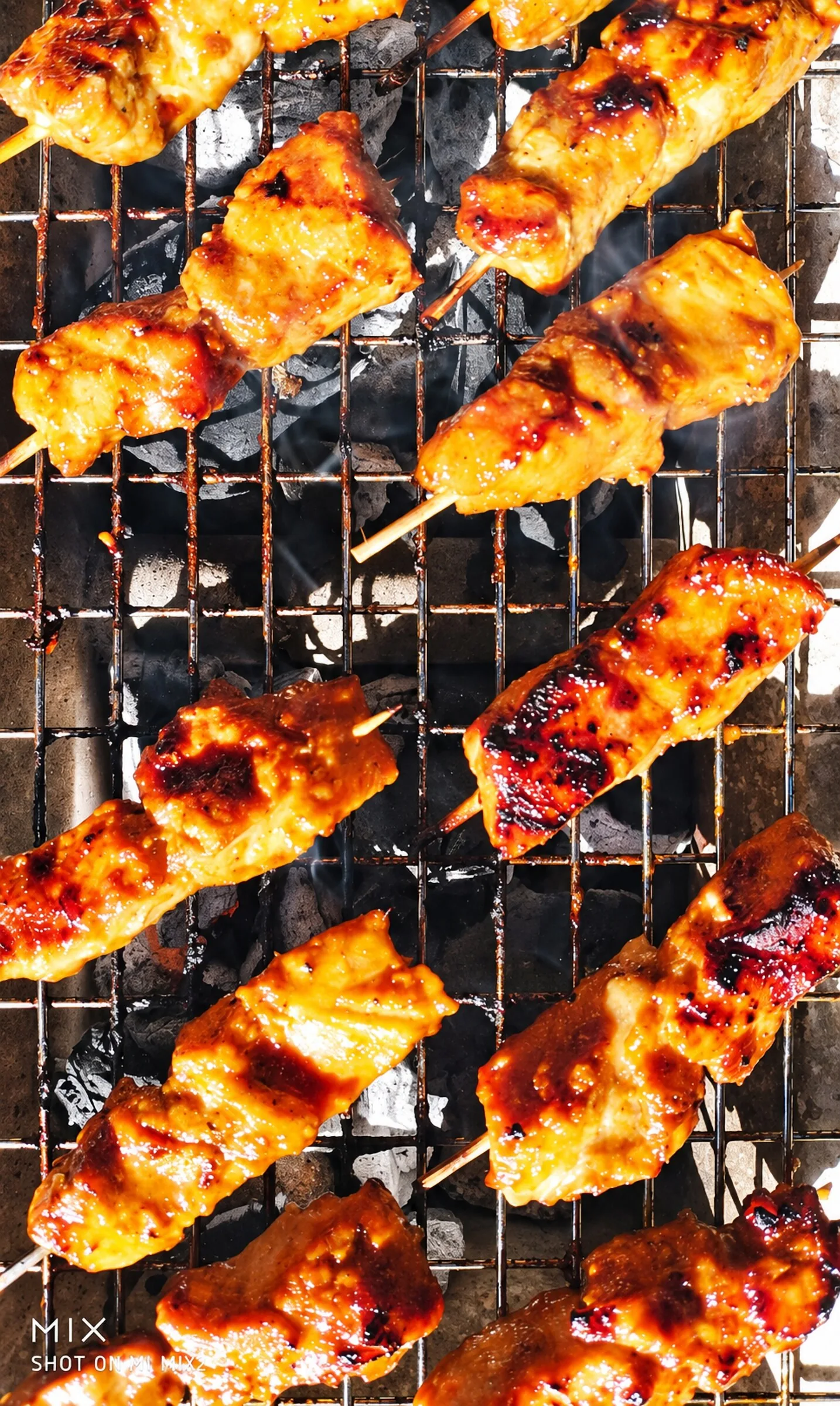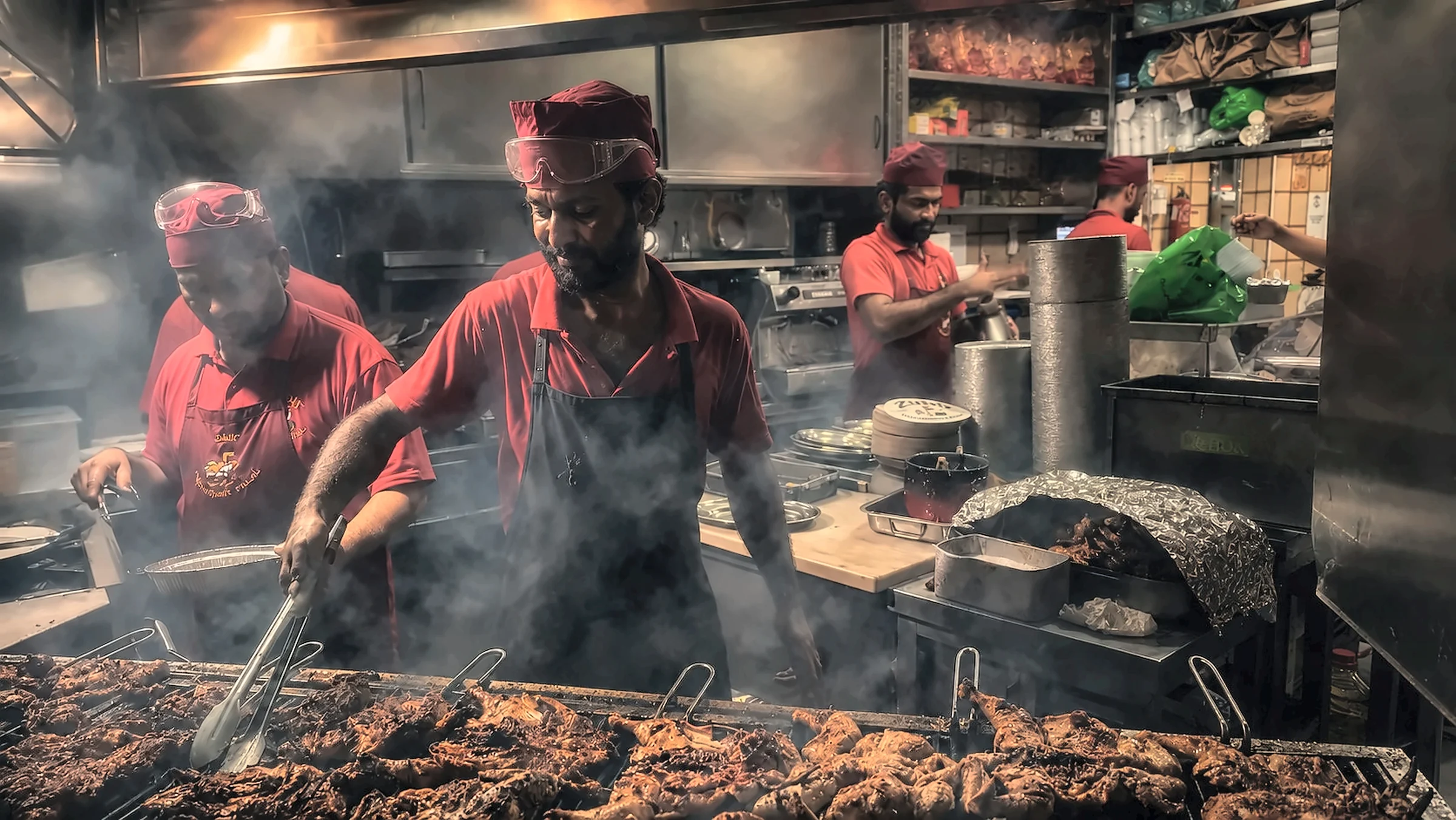
Zubir Churrasqueira in Lisbon — off the ship by now and back on land. Flattened birds on a long charcoal grill, cooked hard, chopped, and slathered with sauce as they come off the fire.
This is version two. Version one was a 24-hour marinade and an hour in the kamado with the heat deflector in, basting with butter. It made a good roast chicken and not this. Three things were wrong, and they are worth knowing because they are the usual three.
The salt. Version one used a teaspoon for a whole bird, about a quarter of a percent of its weight, and said to go light because the restaurant's was a touch salty. That saltiness is the meat. Salt is also the only thing in a marinade that travels into muscle — garlic, paprika, chilli and oil stay in the top millimetre or two whether you give them two hours or twenty-four. So the bird gets salt, a day ahead, and nothing else.
The butter. Zubir sells its sauce three ways — piri-piri, butter and lemon, or all three together — and it goes on as the birds leave the grill. Version one painted it on raw chicken every twelve minutes for an hour, where the milk solids, the paprika and the sugar simply burned. That black on the skin was scorched sauce, not charcoal crust.
The fire. A heat deflector turns a kamado into an oven that smells of charcoal, and the dripping fat lands on a ceramic plate instead of the coals. Out it comes.
And the part that makes it taste like the restaurant rather than like a roast with sauce on it: chop the bird first, then dress it. Sauce slides off skin and eats oily. On hot, freshly cut, salted meat it soaks in, and you need half as much.
Not yet cooked in this form — it is the fix, written down before the next one goes on. The photograph is Zubir's grill, not this recipe.