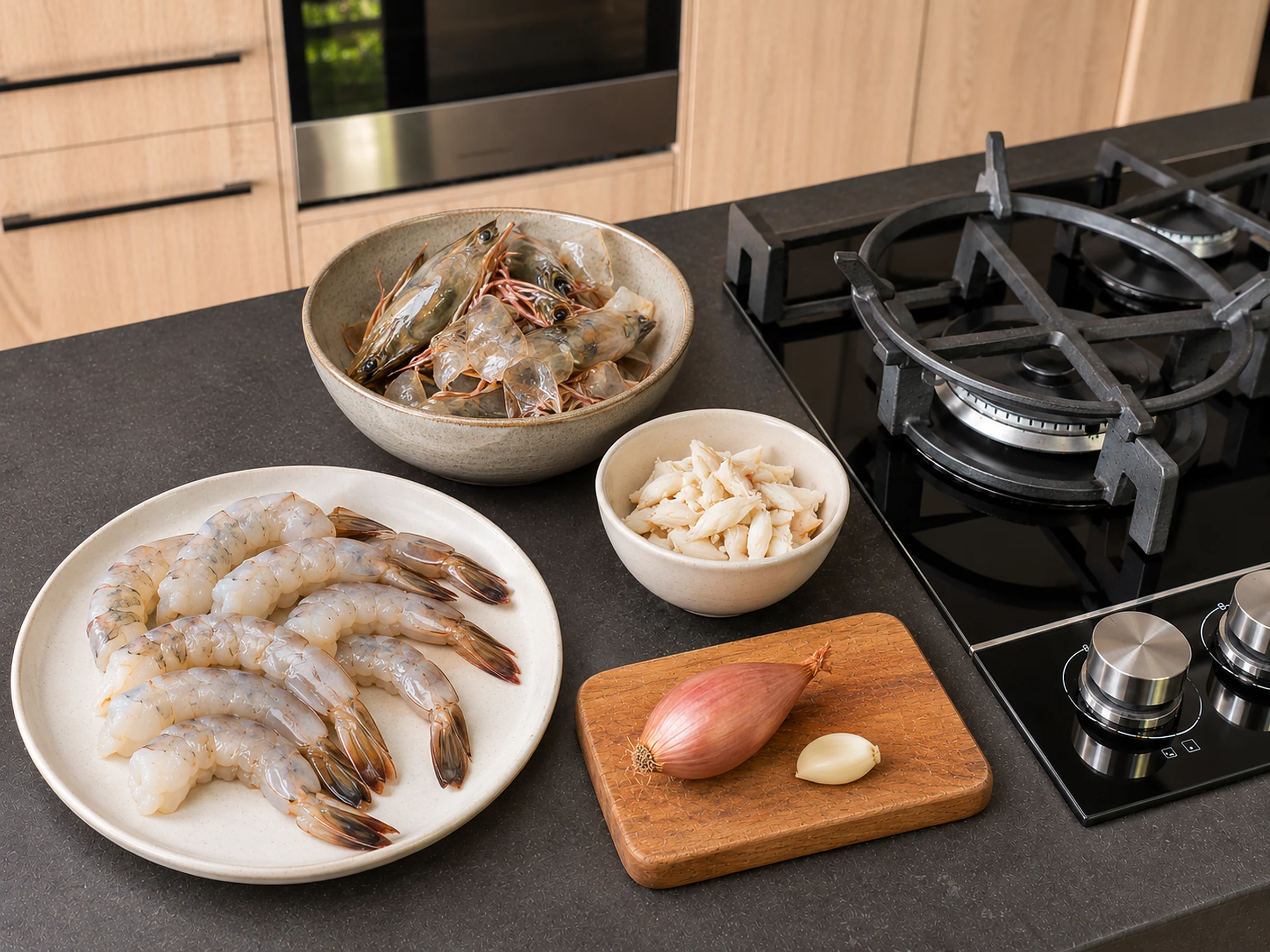
I've got a 300 g tin of Liebig Lobster Bisque, and I reckon it's an awesome base to make a kick-ass restaurant-quality meal without the hours involved in making a bisque. I had a recipe for it that was probably pretty good on its own. But let's see where we can push it.
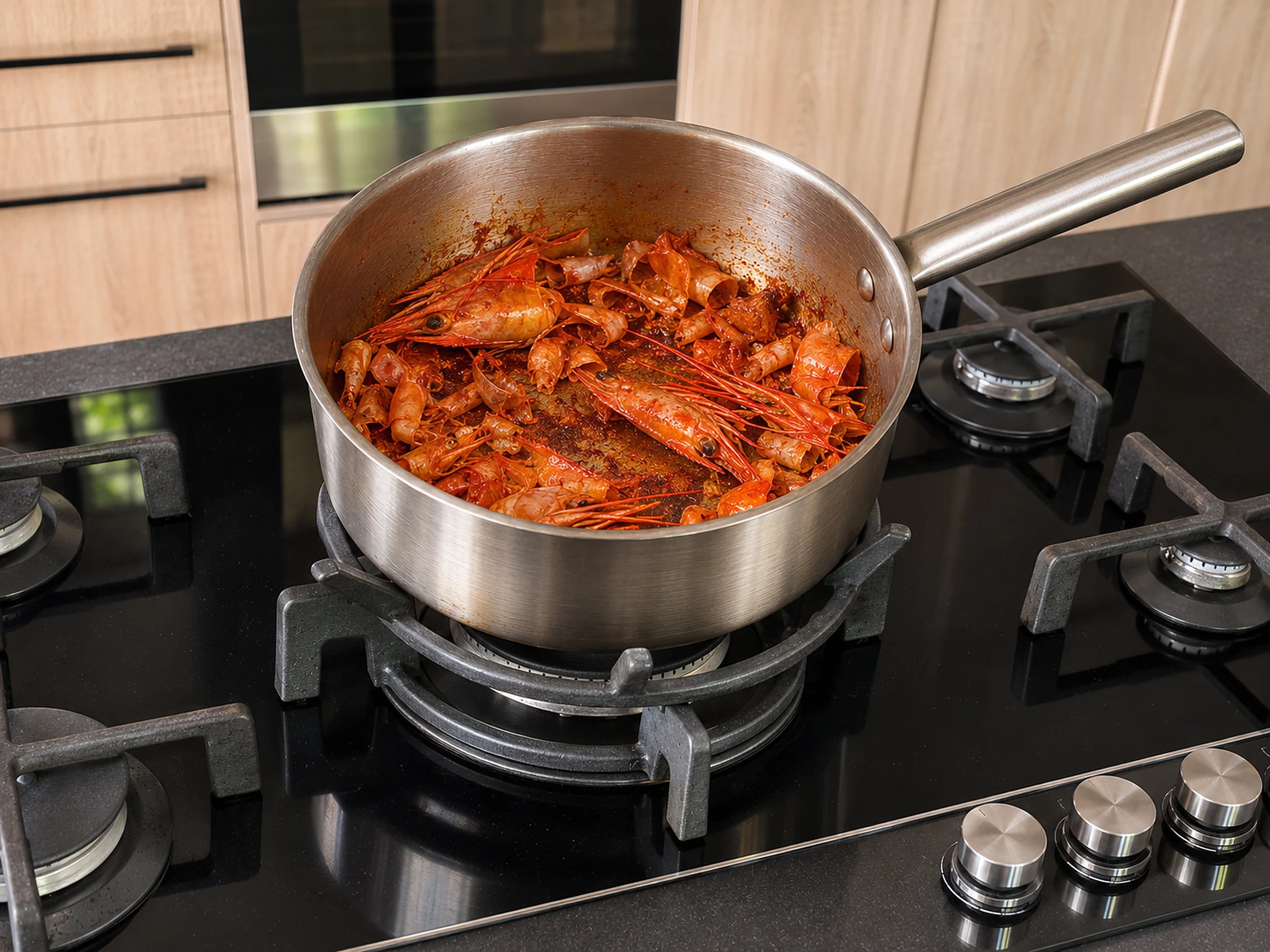
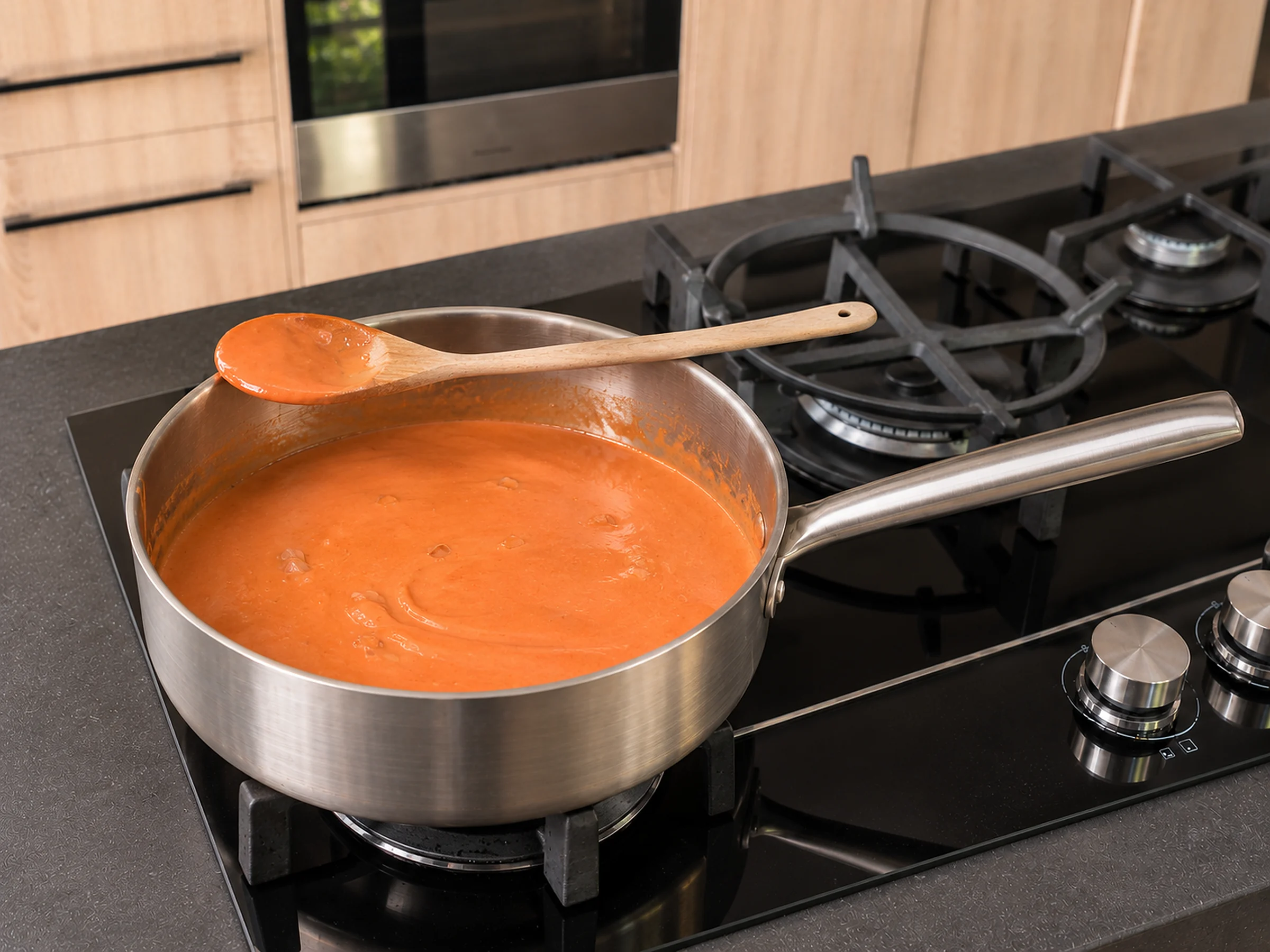
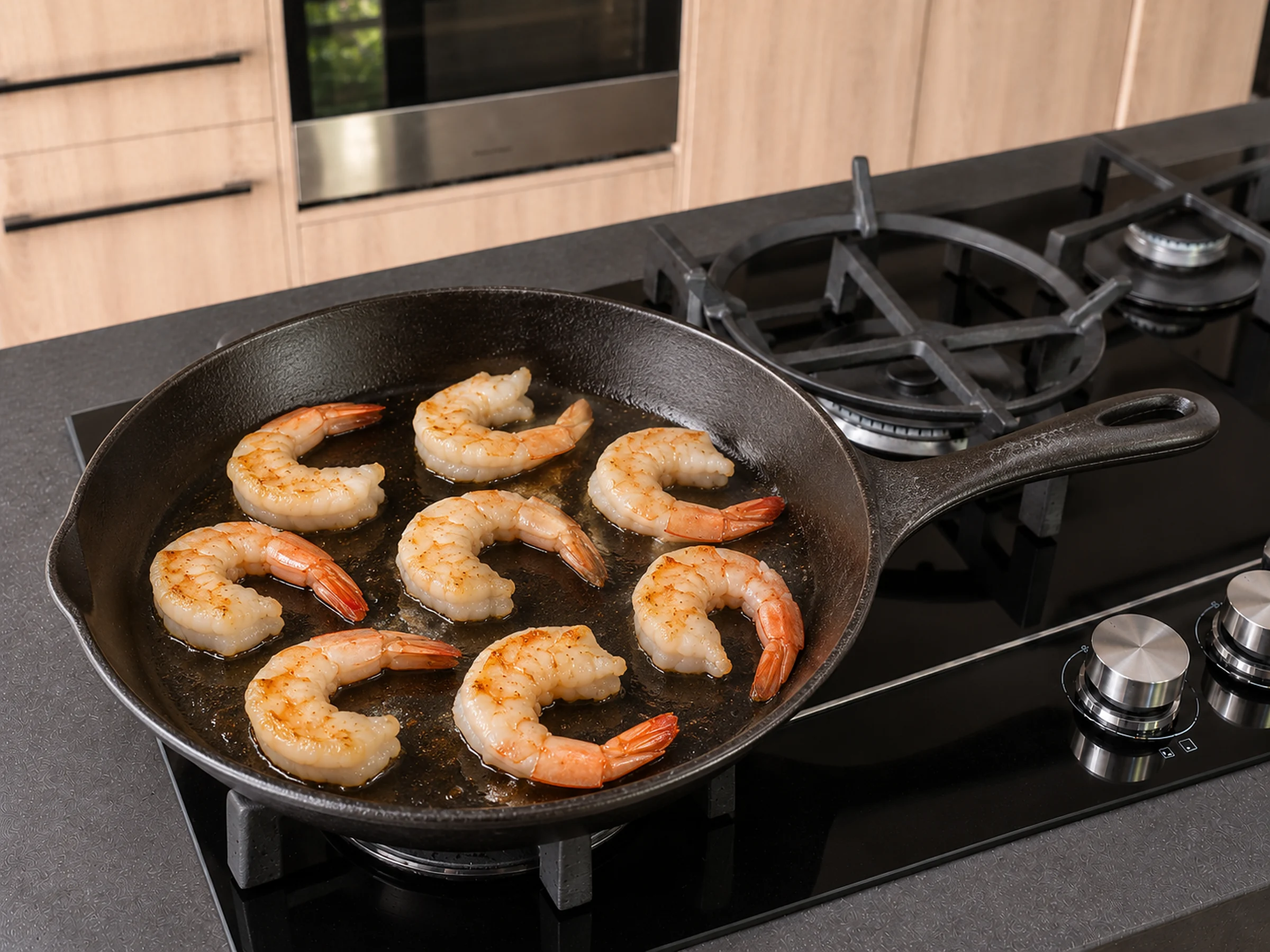
It went through the full AI competition: Claude, Grok, Codex and Gemini, four rounds, blind, with that recipe as the starting point. They kept almost all of it. The tin, the wine, the cognac, the 45 ml of cream and the butter all stay. What changed is small. The prawn shells get roasted hard until the pan's got a brown crust, not just sweated, because that roasted shell is the fresh shellfish flavour a tin can't have. The reduction is measured to exactly 90 ml, so it comes out the same every time. And the pan the prawns were seared in gets a splash of that reduction, scraped into the sauce, so nothing's wasted. Their predictions land around 9 out of 10. It hasn't been cooked in this exact form yet.
The prawns matter. Get raw, head-on Spencer Gulf king prawns from a fishmonger: the heads are where the flavour is. Raw head-on frozen ones, properly thawed, are fine. Cooked deli prawns won't work.
Don't salt the sauce. The tin's already seasoned, and it's got a little chilli in it, so don't add more until you've tasted it.
The step photos are generated, set in a kitchen like mine.
Some stuff about it that's actually true. We checked.
Bisque didn't start out as a seafood soup. In 17th-century France it was a luxury soup of pigeon and chicken, "served only at the tables of great lords". The fish versions came later.
Nobody really knows where the word comes from. It might be the Bay of Biscay. It might be "twice cooked". Both are guesses.
Liebig was a real person, Justus von Liebig, the German chemist behind the 19th-century meat extract. The name stuck. The lobster bisque is a much later French product. The tin is 24% shellfish, and the lobster part works out to the equivalent of 12% lobster. The rest of the shellfish is langoustine and crab.
And blue swimmer crabs really do swim: their back legs are paddles. When they're resting, they bury themselves in the sand with only their eyes and antennae poking out.
AI reviewed by Grok, Codex & Claude