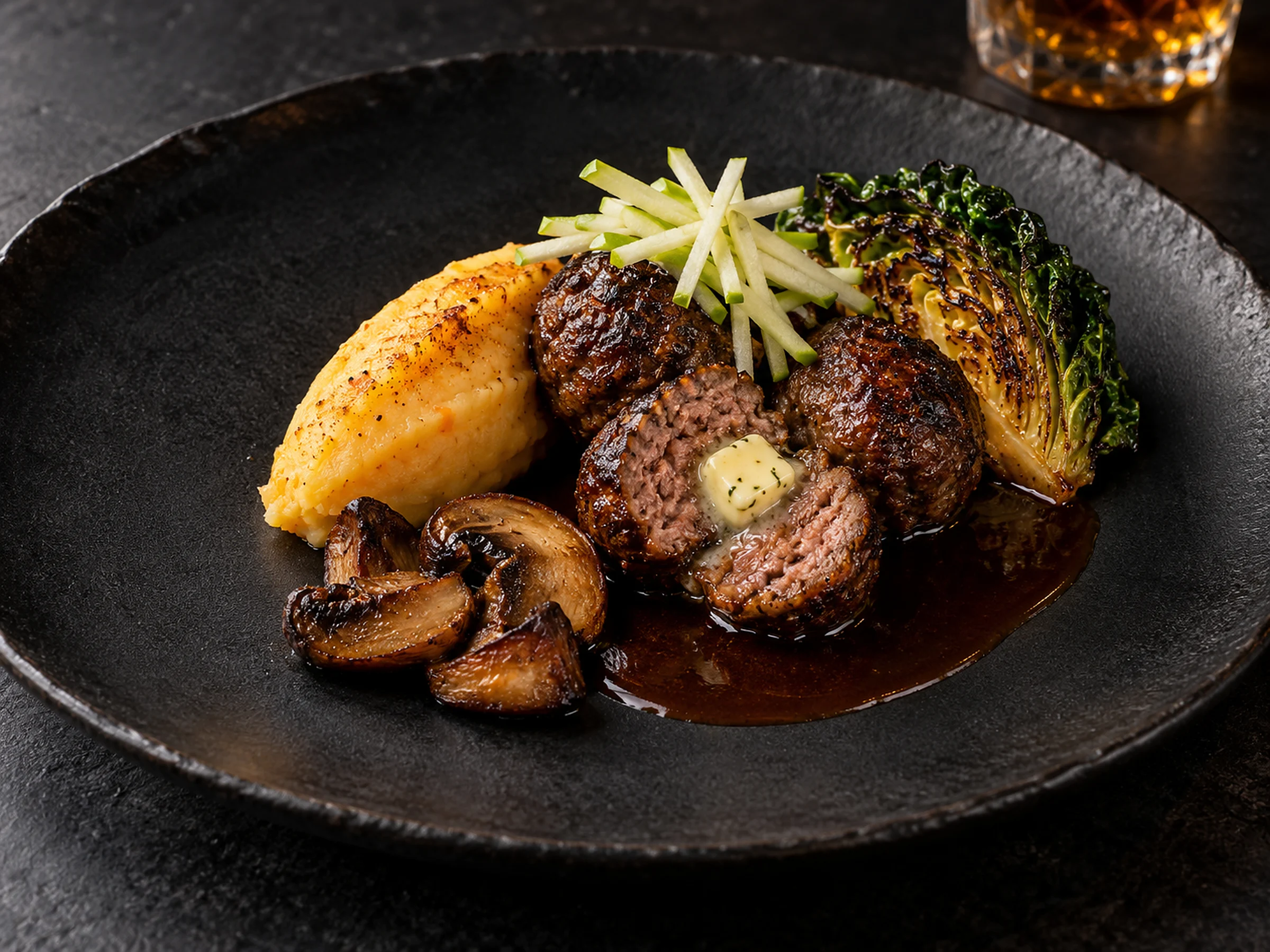
This one is a bit more of high-end restaurant meal -- even though it is meatballs.
Scotch is the point of it, not a novelty. It goes in three times: a sherried malt reduced with the shallot inside the meatball, more reduced into the jus, and a little raw at the end so you can still smell the cask. The peated Islay never touches the pan. A measured few drops go over the hot meatballs as the plate goes out.
What it came down to: - Venison leads. It's coarse-minced, folded through a smaller amount of fine beef that binds it, so you bite pieces of deer, not paste. Fat is added according to the venison label, because farmed venison runs from 3% to 8%. - The oats are cooked to a real porridge before they go in. Raw oats stay mealy. - The meatballs are never simmered in the sauce. Seared hard, roasted to 75°C, then rolled in the jus for 20 seconds. The crust survives. - The jus is reduced from stock that sets when it's cold. Carton gravy can't be a jus. - The mushrooms are browned and kept out of the sauce, so it stays glossy and doesn't turn into stroganoff. - Something sharp to come back to on the third meatball: apple with a little fresh horseradish.
No cream, no black pudding, no smoke from the Kamado. All three were tried on paper and lost: cream dulls the whisky, black pudding fights the venison, and the peat is already the smoke.
Venison: farmed venison shoulder, coarse-minced (ask the butcher to put it through once, on an 8 mm plate). If you can only get fine venison mince, hand-cut half the venison from a steak to 4 mm. No venison: lamb shoulder, minced coarse. It's an honest swap, but it'll taste of lamb.
It hasn't been made in this exact form yet.
AI reviewed by Grok, Codex & Claude